
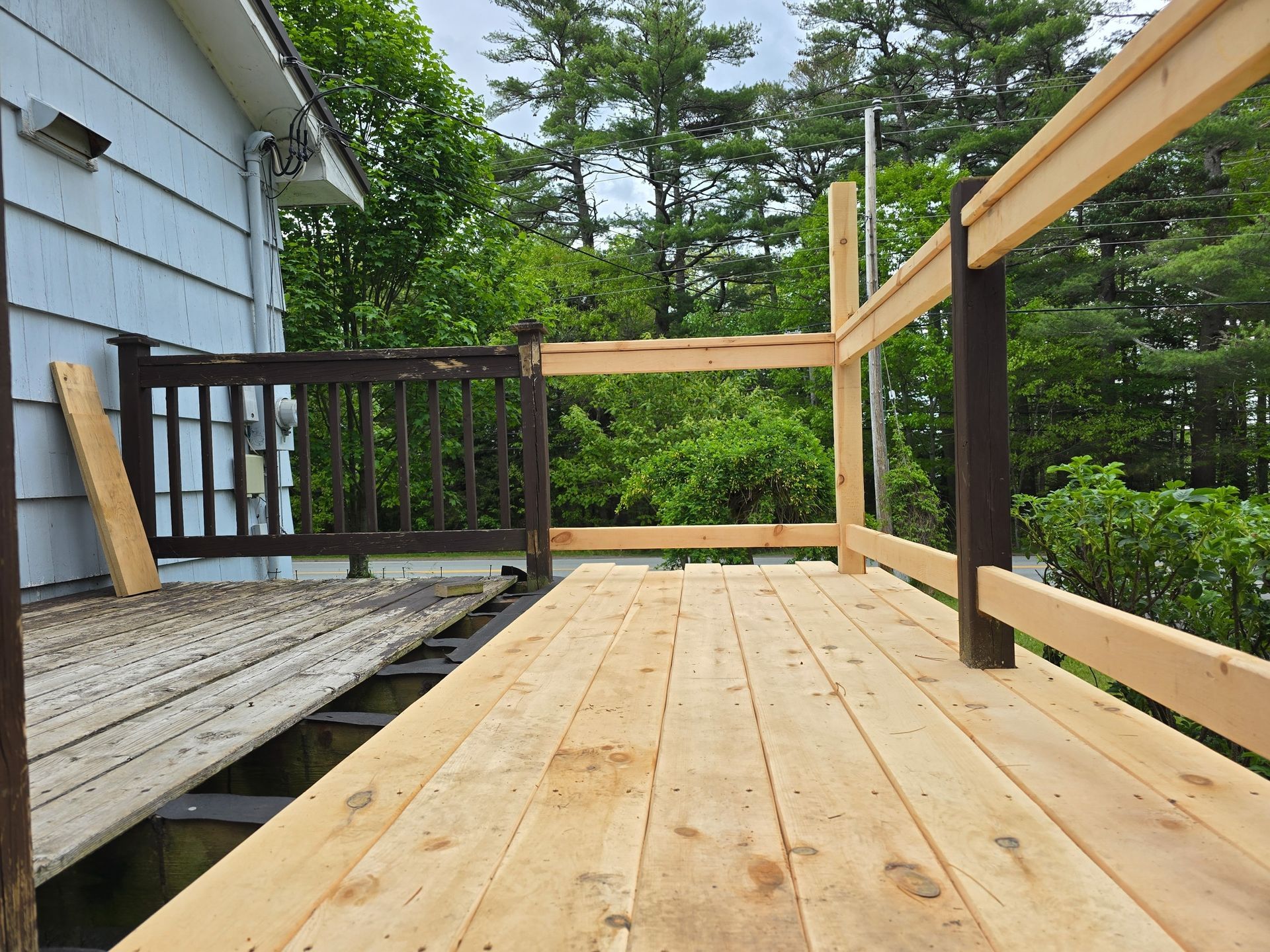
Restoring Outdoor Spaces to Safe Condition
Deck & Porch Repair in the Lynchburg area for damaged railings, rotted boards, and weakened framing
Railings that wobble when touched, decking boards that feel spongy underfoot, and stairs with uneven treads indicate that structural components have deteriorated beyond safe function. Lexteriors repairs damaged decking, railings, stairs, and framing on existing decks and porches in Lynchburg, Forest, Altavista, and surrounding areas, replacing worn materials and reinforcing structural elements before failure creates injury risk. The work addresses visible surface damage and the hidden framing issues that compromise load-bearing capacity, restoring both appearance and the structural integrity that allows safe use.
Repair work involves removing damaged boards or sections, inspecting underlying joists and beams for rot or insect damage, reinforcing or replacing compromised framing members, and installing new decking or railing components using fasteners and techniques that prevent premature wear. Matching existing materials sometimes requires custom milling or sourcing reclaimed lumber when original profiles are no longer manufactured.
Arrange an inspection to assess structural condition and determine which components need replacement versus surface-level refinishing.
What Deck Repairs Actually Accomplish
The repair process begins with identifying which components have lost structural capacity, often by probing boards and framing with an awl to detect soft spots indicating rot, checking fastener integrity where connections have loosened, and measuring deflection under load that exceeds safe limits. Damaged sections are removed to expose the full extent of deterioration, and replacement materials are installed with improved fastening methods and protective coatings that slow future degradation.
After repairs finish, you walk across a deck that feels solid without bounce or flex, lean against railings that don't shift under pressure, and climb stairs with treads that sit level without rocking. Replaced boards match the surrounding surface in color and profile, and the structure supports normal use without creaking or visible movement that signals inadequate support underneath.
The scope includes replacing rotted rim joists where water pooled against the house, reinforcing stair stringers that cracked under repeated load, and upgrading railing posts with deeper anchoring that meets current safety standards. Preventative work like adding flashing where the ledger attaches to the home or improving drainage around footings extends the life of repaired sections by eliminating the moisture exposure that caused the original failure.
Questions Before Starting Repair Work
Repair decisions depend on the extent of damage, the age of the structure, and whether updating to current safety standards is required during the work.
What signs indicate that framing needs replacement instead of just surface boards?
Joists that sag visibly between supports, beams with cracks extending through the thickness, and posts that show rot near ground contact all require structural replacement rather than cosmetic fixes.
How do you match decking when the original wood species is no longer available?
Repairs involve sourcing similar grain patterns and milling custom profiles to blend with existing boards, or replacing entire sections with updated materials if isolated board replacement would create noticeable color differences.
When do repairs make more sense than full deck replacement?
If framing remains structurally sound and damage is limited to surface decking or railings, targeted repairs restore function at a fraction of replacement cost, but widespread rot or code deficiencies may justify rebuilding.
What causes deck boards to rot prematurely in Lynchburg's climate?
Poor drainage that allows standing water, inadequate ventilation beneath the deck that traps moisture, and fastener choices that create pathways for water penetration all accelerate rot in humid conditions common during summer months.
How long do repaired sections last compared to the original construction?
When repairs use improved materials and address the moisture issues that caused initial failure, replaced components often outlast surrounding sections that still have the original installation defects.
Lexteriors conducts thorough structural assessments that identify safety concerns and prioritize repairs based on risk, providing clear explanations of what work is necessary versus optional. Schedule an evaluation to determine the best approach for restoring your outdoor space to safe, usable condition.
Contact Us
Contact Us
We will get back to you as soon as possible.
Please try again later.